Elemental Oracle vs. Tarot: A Deep Dive into Their Unique Energies and Applications
Introduction: Navigating the World of Divinatory Tools
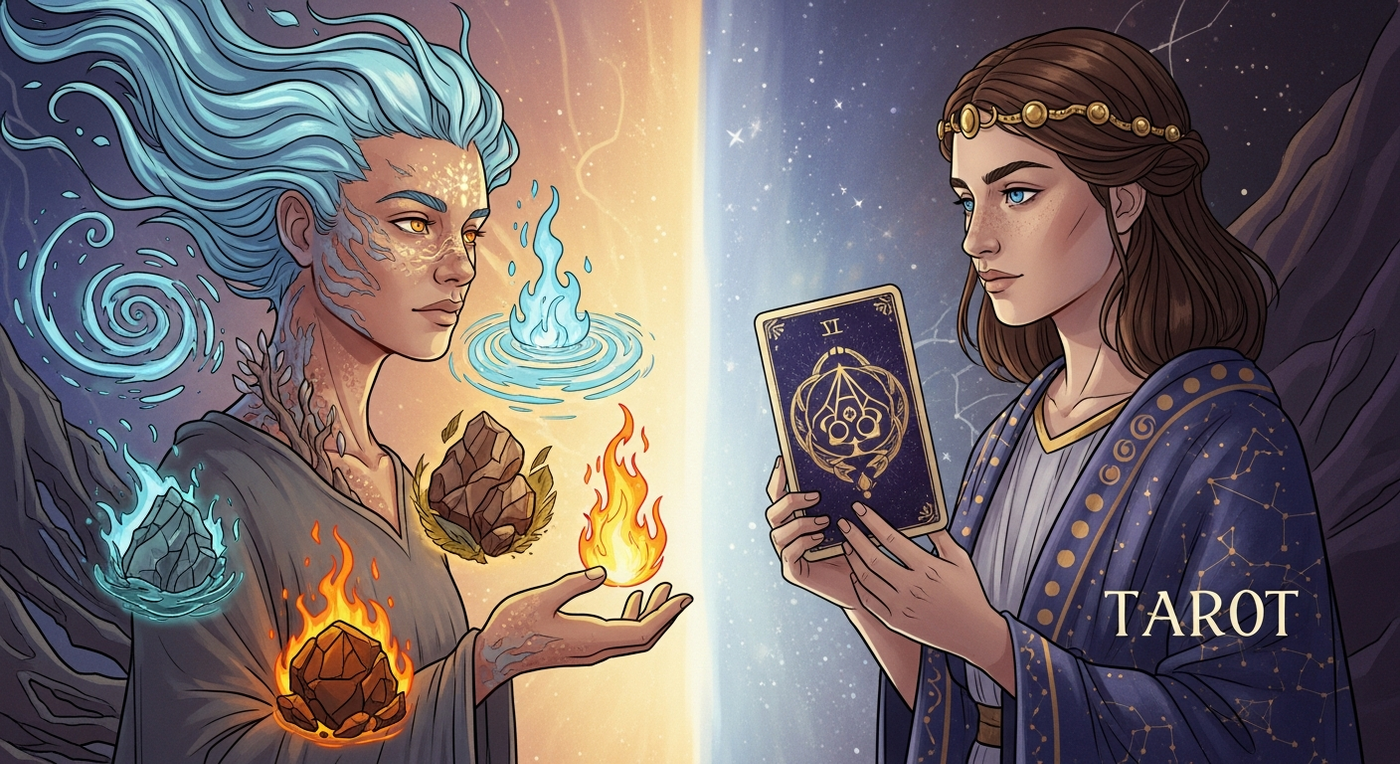
In an era marked by rapid change and a deep yearning for connection, the ancient art of divination is experiencing a profound resurgence. More than ever, individuals are seeking accessible, intuitive pathways to self-discovery, clarity, and spiritual guidance. Among the myriad tools available, two stand out for their distinct energies and applications: the elemental oracle and the traditional tarot deck. Understanding the nuances between these systems is crucial for any seeker looking to harness their power effectively. This guide will delve deep into the heart of what makes each unique, empowering you to choose the divinatory companion that best aligns with your current journey. We will explore the foundational principles, symbolic languages, and practical applications of both, with a particular focus on the Elemental Oracle Deck as a prime example of how nature's fundamental forces can illuminate our lives.
The Rise of Oracle Decks
Oracle decks, in their modern iteration, have captured the imagination of a generation hungry for straightforward, intuitive wisdom. Unlike the intricate systems of tarot, many oracle decks offer a more direct and personal connection. Their appeal lies in their accessibility; often featuring beautiful, evocative imagery and concise keywords, they invite users to engage with their inner knowing without requiring years of dedicated study. This democratized approach to divination has made them a popular choice for daily affirmations, quick insights into immediate situations, and as a gentle introduction to the world of card-based guidance. They offer a welcoming gateway, fostering a sense of empowerment and self-trust from the very first draw.
The Enduring Legacy of Tarot
For centuries, tarot has been a cornerstone of esoteric wisdom, a profound system rich with archetypal narratives and layered symbolism. Its intricate structure, comprising the Major and Minor Arcana, offers a comprehensive map of the human experience, from grand spiritual lessons to the everyday ebb and flow of life. Tarot's enduring power lies in its depth; each card is a universe of meaning, interwoven with mythology, astrology, numerology, and history. While it demands a greater investment in study and practice, the rewards are immense: a profound understanding of life's patterns, a potent tool for shadow work, and a detailed roadmap for personal transformation. The journey with tarot is often one of deep self-exploration, revealing the intricate tapestry of our souls.
What This Guide Will Cover
This comprehensive guide is designed to illuminate the distinct energies, structures, and applications of elemental oracle decks and tarot. We aim to equip you with the knowledge to confidently discern which system best serves your needs at any given moment. You will gain a clear understanding of the foundational philosophies that underpin each, the unique ways they communicate wisdom, and the specific scenarios where one might be more beneficial than the other. By the end of this exploration, you will not only appreciate the individual strengths of elemental oracle vs tarot but also discover how these powerful tools can potentially work in synergy to enrich your divinatory practice. We will highlight how the Elemental Oracle Deck, with its direct connection to Earth's foundational energies, offers a unique and potent form of guidance.
The Elemental Oracle Deck: Foundation in Natural Forces
At its core, the Elemental Oracle Deck is a powerful testament to the profound wisdom embedded within the natural world. It grounds its practice in the archetypal energies of the four classical elements: Earth, Air, Fire, and Water. These are not merely physical substances; they are potent forces that govern every aspect of existence, both within us and around us. Understanding these elements is key to unlocking the deck's intuitive power.
Core Philosophy: The Four Elements
The foundational principle of the Elemental Oracle Deck is its unwavering reliance on the archetypal energies of Earth, Air, Fire, and Water. Each element embodies a distinct set of qualities, energies, and life experiences, acting as fundamental building blocks for understanding ourselves and the world.
The Elemental Oracle Deck presents these energies not as separate entities, but as interconnected forces that constantly influence and shape our reality. A reading from this deck offers insight into the balance (or imbalance) of these elements within a situation or within ourselves, providing a clear picture of the underlying energetic dynamics at play.
Structure and Symbolism
The structure of an elemental oracle, such as the Elemental Oracle Deck, is typically designed for direct resonance with these core energies. While specific designs vary, common formats include cards dedicated to each of the four elements, cards representing combinations or transitions between elements, and cards that highlight specific aspects or manifestations of elemental influence.
The symbolism employed is often more direct and nature-aligned than that found in tarot. You might see imagery of mountains, winds, flames, or oceans, directly evoking the essence of each element. This deliberate choice makes the symbolism more universally accessible and less reliant on specific cultural or historical contexts. The visual language is designed to bypass the analytical mind and speak directly to our primal, intuitive understanding of the natural world. For instance, a card depicting a sturdy oak tree would immediately convey the essence of Earth's strength and resilience, while a swirling vortex of wind would intuitively represent the dynamic movement and communication of Air. This directness fosters an immediate, visceral connection, making the deck feel deeply personal and inherently understandable.
Intuitive Connection
One of the most significant strengths of the Elemental Oracle Deck lies in its capacity to foster an immediate and visceral intuitive connection. Because the symbolism is so closely aligned with the fundamental forces of nature, which are deeply ingrained in our collective consciousness, users often find themselves resonating with the cards on a gut level. This inherent accessibility makes it an ideal tool for beginners who may feel intimidated by the complexity of tarot. Even without prior knowledge, the imagery and the core elemental principles guide the interpretation.
Furthermore, for those who feel a strong affinity with nature's cycles, the seasons, or the raw power of the elements, this deck offers a profoundly personal and resonant experience. It speaks a language that feels ancient and familiar, tapping into a wellspring of innate wisdom. This intuitive pathway bypasses the need for extensive memorization of meanings, instead encouraging a dialogue between the user's inner knowing and the elemental energies presented. The deck acts as a mirror, reflecting the elemental forces present within the querent's situation and their own being, thereby amplifying self-awareness and facilitating clearer guidance.
The Tarot Deck: A Rich Tapestry of Archetypes
In contrast to the direct elemental focus of an oracle deck, the tarot offers a vast and intricate landscape of archetypal wisdom. Its enduring appeal lies in its comprehensive narrative structure, its layered symbolism, and its capacity for profound self-exploration.
The Major and Minor Arcana
The traditional tarot deck is divided into two distinct yet interconnected parts: the 22 Major Arcana and the 56 Minor Arcana. This structure provides a framework for understanding both universal life lessons and the more mundane, everyday experiences we encounter.
Together, the Major and Minor Arcana form a complete system, offering a rich tapestry of symbolic meaning that can be applied to virtually any question or situation.
Symbolism and Interpretation
The symbolism within a tarot deck is notoriously rich, complex, and multi-layered. It draws heavily from a vast reservoir of human knowledge, including mythology, astrology, numerology, Kabbalah, and historical contexts. Each card is not merely an image but a dense constellation of symbols, each carrying its own significance and contributing to the card's overall meaning.
For example, the position of a figure, the objects they hold, the colors used, the celestial bodies depicted, or the surrounding landscape can all offer crucial clues for interpretation. The number on a card (in the Minor Arcana) also carries numerological weight, adding another dimension to its meaning. This depth allows for incredibly nuanced readings, revealing subtle connections and intricate patterns within a question or situation.
Interpreting tarot, therefore, often requires a dedicated study of its symbolic language and archetypal meanings. While intuition plays a vital role, a foundational understanding of tarot's rich lexicon is essential for unlocking its full potential. This is where the elemental oracle vs tarot distinction becomes particularly apparent; while an elemental oracle might offer a more immediate, intuitive grasp of its message, tarot invites a deeper intellectual and spiritual engagement with its multifaceted symbolism.
Narrative and Journey
One of the most compelling aspects of tarot is its ability to weave a narrative. A tarot spread is not simply a collection of individual card meanings; it is a story unfolding, a journey being mapped out. The progression of cards from one position to another in a spread often mirrors the archetypal journey of the Fool, illustrating the challenges faced, the lessons learned, and the potential outcomes of a situation.
This narrative quality makes tarot an exceptionally powerful tool for understanding complex life situations, personal growth trajectories, and long-term potentials. It can reveal the underlying dynamics of relationships, the progression of a project, or the spiritual path an individual is currently traversing. The cards, when laid out, speak in a cohesive voice, guiding the querent through a story that is deeply personal and profoundly insightful. This storytelling capacity is a hallmark of tarot, offering a holistic perspective that can illuminate even the most intricate aspects of our lives.
Key Differences: Energy, Structure, and Approach
While both elemental oracles and tarot decks serve as powerful tools for divination and self-discovery, their fundamental differences in energy, structure, and approach cater to distinct needs and offer unique pathways to insight. Understanding these distinctions is crucial for choosing the right tool for your practice.
Energetic Focus
The most prominent difference lies in their energetic focus. An elemental oracle deck, like the Elemental Oracle Deck, is deeply rooted in the tangible, primal forces of nature. Its energy is direct, immediate, and often visceral. It taps into the fundamental qualities of Earth, Air, Fire, and Water, reflecting these energies as they manifest in our physical world, our emotions, our thoughts, and our actions. The guidance derived from an elemental oracle is often about understanding the present energetic landscape, identifying imbalances, and harnessing the power of these foundational elements for grounding, clarity, inspiration, or emotional processing. It speaks to the elemental forces that are actively shaping our immediate reality.
Tarot, on the other hand, offers a broader and more archetypal energetic focus. While its suits are associated with the elements, its primary lens is on the human experience, spiritual archetypes, and the deeper currents of the soul. Tarot's energy is more encompassing, exploring the universal patterns of life, the complexities of the human psyche, and the overarching spiritual lessons we are meant to learn. It delves into the symbolic representation of these forces and their impact on our life's journey. The energy of tarot is less about the immediate elemental composition of a situation and more about the archetypal significance of the journey being undertaken.
Structural Framework
The structural framework of these decks is also a significant point of divergence. An elemental oracle deck typically features cards that directly represent the four elements, often with variations that explore their interactions or specific attributes. The system is generally more straightforward, built around the core concept of elemental balance and influence. The number of cards and their organization are designed to provide clear, accessible insights related to these fundamental forces. The structure supports a direct reading of elemental energies.
Tarot, with its intricate architecture of the Major and Minor Arcana, presents a much more complex structural framework. The 22 Major Arcana cards act as significant milestones and universal lessons, while the 56 Minor Arcana cards, divided into four suits, detail the everyday occurrences and specific energies within those realms. This dual structure allows for a more nuanced and detailed exploration of a question, providing both broad thematic insights and specific practical advice. The narrative potential of tarot stems directly from this structured progression, offering a more comprehensive map of a situation or life path. The impact on the reading experience is profound: an elemental oracle tends to offer a focused, elemental reading, while tarot provides a more expansive, narrative-driven interpretation.
Interpretative Style
The interpretative style naturally follows from the energetic focus and structural framework. Elemental oracles generally offer more direct and intuitive interpretations. The symbolism, often rooted in nature, speaks a language that is readily understood on an instinctive level. Keywords are often concise, and the connection between the image and its meaning is frequently clear, making it easier for beginners to grasp. The interpretation tends to be straightforward, focusing on the immediate energetic influences and actionable guidance.
Tarot, conversely, lends itself to more nuanced and complex interpretations. The layered symbolism, the interplay between Major and Minor Arcana, and the narrative potential of spreads require a deeper level of study and intuitive integration. An interpretation of a tarot card can encompass multiple layers of meaning, drawing connections to astrological influences, numerological patterns, and archetypal significance. This complexity allows for profound self-reflection and the uncovering of subtle truths, but it also means that tarot readings can be more intricate and require a more developed interpretative skill set. The elemental oracle vs tarot debate often centers on this aspect: the directness of the former versus the depth of the latter.
Key Differences: Energy, Structure, and Approach
While both elemental oracles and tarot decks serve as powerful tools for divination and self-discovery, their fundamental differences in energy, structure, and approach cater to distinct needs and offer unique pathways to insight. Understanding these distinctions is crucial for choosing the right tool for your practice.
Energetic Focus
The most prominent difference lies in their energetic focus. An elemental oracle deck, like the Elemental Oracle Deck, is deeply rooted in the tangible, primal forces of nature. Its energy is direct, immediate, and often visceral. It taps into the fundamental qualities of Earth, Air, Fire, and Water, reflecting these energies as they manifest in our physical world, our emotions, our thoughts, and our actions. The guidance derived from an elemental oracle is often about understanding the present energetic landscape, identifying imbalances, and harnessing the power of these foundational elements for grounding, clarity, inspiration, or emotional processing. It speaks to the elemental forces that are actively shaping our immediate reality.
Tarot, on the other hand, offers a broader and more archetypal energetic focus. While its suits are associated with the elements, its primary lens is on the human experience, spiritual archetypes, and the deeper currents of the soul. Tarot's energy is more encompassing, exploring the universal patterns of life, the complexities of the human psyche, and the overarching spiritual lessons we are meant to learn. It delves into the symbolic representation of these forces and their impact on our life's journey. The energy of tarot is less about the immediate elemental composition of a situation and more about the archetypal significance of the journey being undertaken.
Structural Framework
The structural framework of these decks is also a significant point of divergence. An elemental oracle deck typically features cards that directly represent the four elements, often with variations that explore their interactions or specific attributes. The system is generally more straightforward, built around the core concept of elemental balance and influence. The number of cards and their organization are designed to provide clear, accessible insights related to these fundamental forces. The structure supports a direct reading of elemental energies.
Tarot, with its intricate architecture of the Major and Minor Arcana, presents a much more complex structural framework. The 22 Major Arcana cards act as significant milestones and universal lessons, while the 56 Minor Arcana cards, divided into four suits, detail the everyday occurrences and specific energies within those realms. This dual structure allows for a more nuanced and detailed exploration of a question, providing both broad thematic insights and specific practical advice. The narrative potential of tarot stems directly from this structured progression, offering a more comprehensive map of a situation or life path. The impact on the reading experience is profound: an elemental oracle tends to offer a focused, elemental reading, while tarot provides a more expansive, narrative-driven interpretation.
Interpretative Style
The interpretative style naturally follows from the energetic focus and structural framework. Elemental oracles generally offer more direct and intuitive interpretations. The symbolism, often rooted in nature, speaks a language that is readily understood on an instinctive level. Keywords are often concise, and the connection between the image and its meaning is frequently clear, making it easier for beginners to grasp. The interpretation tends to be straightforward, focusing on the immediate energetic influences and actionable guidance.
Tarot, conversely, lends itself to more nuanced and complex interpretations. The layered symbolism, the interplay between Major and Minor Arcana, and the narrative potential of spreads require a deeper level of study and intuitive integration. An interpretation of a tarot card can encompass multiple layers of meaning, drawing connections to astrological influences, numerological patterns, and archetypal significance. This complexity allows for profound self-reflection and the uncovering of subtle truths, but it also means that tarot readings can be more intricate and require a more developed interpretative skill set. The elemental oracle vs tarot debate often centers on this aspect: the directness of the former versus the depth of the latter.
When to Choose an Elemental Oracle Deck
The decision to reach for an elemental oracle deck is often guided by the nature of the question or the desired outcome of the reading. These decks excel when direct, elemental wisdom is needed.
Seeking Grounding and Stability
When you feel scattered, overwhelmed, or disconnected from your physical reality, the Earth element cards in an oracle deck can be profoundly grounding. They offer insights into material matters, abundance, and the importance of a solid foundation. A reading focused on Earth energies can help you identify areas where you need to cultivate more stability, manage resources wisely, or reconnect with the physical world. This is particularly useful for practical problem-solving and ensuring that your spiritual pursuits are anchored in tangible reality.
Exploring Communication and Intellect
For challenges involving communication, decision-making, or mental clutter, the Air element cards provide clarity. They illuminate thought processes, highlight areas where intellectual understanding is needed, and can offer guidance on how to express yourself more effectively. If you are grappling with a complex idea, facing a difficult conversation, or need to cut through mental fog, an Air-focused reading can bring sharp, clear insights.
Igniting Passion and Action
When your motivation is waning, or you need a catalyst for change, the Fire element cards are invaluable. They represent passion, courage, creativity, and the drive to take action. A Fire-dominant reading can help you tap into your inner fire, overcome inertia, and embrace transformative experiences. This is ideal for situations where bold steps are required or when you need to reignite your enthusiasm for a project or life goal.
Navigating Emotions and Intuition
For understanding your inner emotional landscape, processing feelings, or tuning into your intuition, the Water element cards are your guide. They speak to the subconscious, healing, and the flow of life. If you are experiencing emotional turbulence, seeking deeper self-understanding, or trying to trust your gut feelings, Water cards offer a gentle yet profound way to explore these depths.
For Beginners and Quick Insights
The straightforward symbolism and direct interpretations of elemental oracle decks make them an excellent entry point for those new to divination. They offer accessible wisdom without requiring extensive prior knowledge. For daily affirmations, quick checks on immediate situations, or when you need a swift, actionable piece of guidance, an elemental oracle provides an efficient and empowering experience.
When to Choose a Tarot Deck
Tarot's intricate structure and rich symbolism lend themselves to deeper, more comprehensive explorations of life's complexities.
Deep Self-Exploration and Soul Work
Tarot's archetypal narratives, particularly through the Major Arcana, are unparalleled for delving into profound self-exploration. When you are ready to confront shadow aspects, understand core life lessons, or explore the deeper purpose of your soul's journey, tarot provides the detailed map. It encourages introspection and facilitates the uncovering of subconscious patterns that shape your experiences.
Understanding Complex Life Situations
For intricate relationships, multifaceted projects, or situations with many moving parts, tarot excels at providing a detailed, nuanced overview. The interplay of the Major and Minor Arcana allows for an examination of both the grand themes and the practical details, offering a holistic perspective that can illuminate the underlying dynamics and potential outcomes.
Long-Term Guidance and Life Path Readings
When seeking guidance on longer-term trajectories, career paths, or significant life transitions, tarot's narrative structure is invaluable. It can map out potential future developments, highlight the lessons inherent in the journey, and offer wisdom for navigating the road ahead. This makes it ideal for understanding your overall life path and making informed decisions about your future.
Developing Deeper Divinatory Skills
For those committed to honing their intuitive and interpretive abilities, tarot offers a rich and challenging field of study. Its layers of symbolism and interconnected meanings provide endless opportunities for learning, practice, and the development of a sophisticated divinatory practice.
Can They Be Used Together?
Absolutely. The most powerful divinatory practices often involve integrating different tools to gain a more comprehensive understanding.
Complementary Energies
The direct, elemental energy of an oracle deck can beautifully complement the archetypal depth of tarot. For instance, a tarot reading might reveal a challenge related to emotional expression (perhaps indicated by a reversed Cups card). Following up with an elemental oracle reading, specifically drawing Water cards, could provide more specific insights into the nature of that emotional block and offer elemental remedies for healing or flow.
Synergistic Readings
Imagine a situation where a tarot reading highlights the need for decisive action (indicated by Fire suit cards or cards like The Emperor). An elemental oracle could then be used to ask, "What specific elemental energy do I need to harness to take this action effectively?" This could lead to drawing a Fire card that emphasizes courage and initiative, or perhaps an Earth card suggesting the need for a practical, step-by-step approach. Combining the elemental oracle vs tarot in this manner offers a richer, multi-dimensional perspective that addresses both the archetypal significance and the immediate energetic influences at play.
Choosing Your Path: A Personal Decision
Ultimately, the choice between an elemental oracle and tarot, or the decision to use them in conjunction, is a deeply personal one.
Trust Your Intuition
The most effective divinatory tool is the one that resonates most strongly with you. Pay attention to which deck calls to you, which imagery speaks to your soul, and which system feels most natural to work with. Your intuition is your most reliable guide in this journey.
Experiment and Explore
The best way to discover your preference is through practice. Acquire both types of decks and experiment with them. See how they feel in your hands, how their energies manifest in your readings, and which one consistently provides the clarity and guidance you seek. The Elemental Oracle Deck, with its direct connection to nature's fundamental forces, can be a wonderful starting point for many.
The Elemental Oracle Deck as a Gateway
For many, the Elemental Oracle Deck serves as an accessible and profound gateway into the world of intuitive guidance. Its focus on fundamental natural forces makes it universally relatable and offers immediate, actionable insights. It empowers users to connect with the inherent wisdom of the elements, fostering a sense of groundedness and clarity that can be foundational for any spiritual practice.
Conclusion: Empowering Your Journey with the Right Tool
The distinction between elemental oracle vs tarot reveals two powerful, yet distinct, approaches to divination. The elemental oracle, exemplified by the Elemental Oracle Deck, offers a direct, intuitive connection to the primal forces of nature, providing clear guidance on grounding, communication, passion, and emotion. Tarot, with its intricate structure of Major and Minor Arcana, offers a profound exploration of archetypal journeys and complex life narratives.
Both systems hold immense value, and their power is often amplified when used in synergy. By understanding their unique energies, structures, and interpretative styles, you can confidently select the tool that best aligns with your current needs. Whether you are seeking immediate elemental wisdom or embarking on a deep archetypal journey, these divinatory companions are here to illuminate your path, empower your decisions, and enrich your understanding of yourself and the world around you. The profound wisdom of the elements, and the timeless archetypes of tarot, are waiting to guide you.